 GunSerials
Winchester Model 72A serial numbers — why most have none
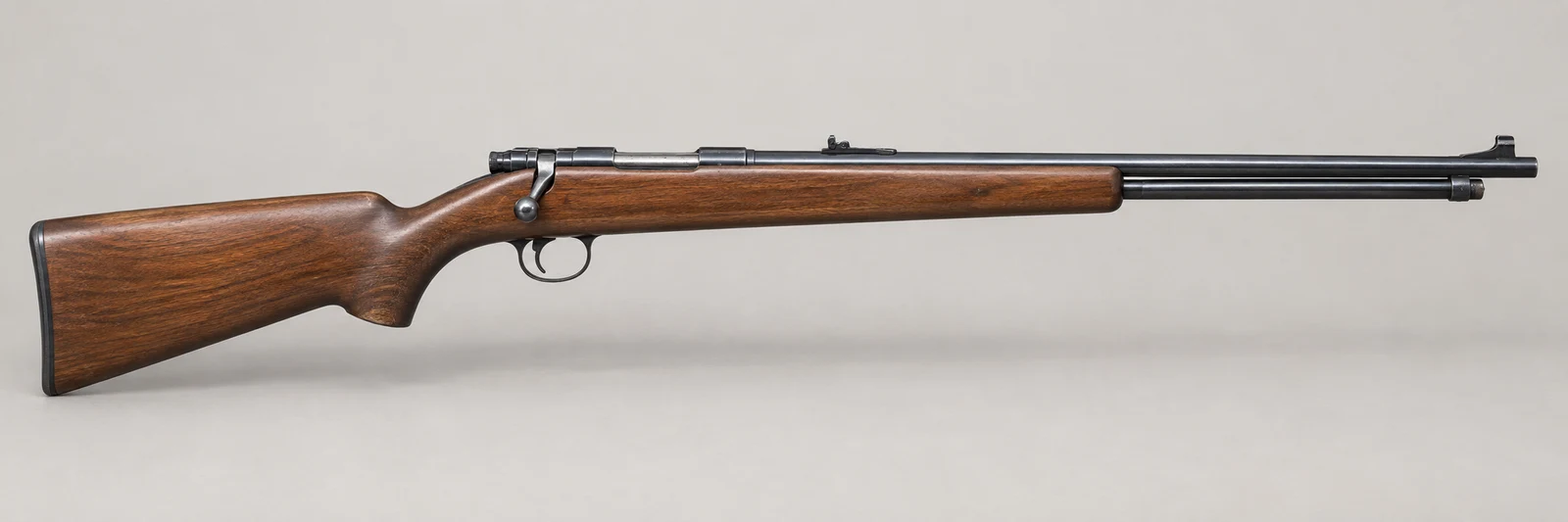
The Winchester Model 72A is a bolt-action .22 rimfire rifle produced from 1949 to 1959, an updated version of the original Model 72 (1938–1949).
- Produced:
- 1949–1959
- Action:
- bolt-action
New to gun terms? Start here
- Model:
- The name of the gun design, such as Model 94. A model name that looks like a year does not tell you when your gun was made.
- Serial number:
- The number stamped on an individual gun. Include letters that are part of the number. A separate letter stamped above it, like the Model 97's C, D or E, is a different marking.
- Receiver:
- The main metal body just behind the barrel. The receiver ring is its front section, where the barrel joins it.
- Tang:
- A strip of metal extending from the receiver into the stock. The lower tang runs underneath, behind the trigger.
- Stock:
- The part you hold against your shoulder, usually made of wood on older Winchesters.
- Forearm or forend:
- The part under the barrel where your forward hand holds the gun.
- Action:
- The mechanism that loads and removes cartridges. Names such as lever action, pump action, and bolt action describe how it works.
- Caliber or gauge:
- The ammunition size or type a gun is designed to use. This marking is different from the model and serial number.
- Takedown:
- A version designed to separate into major sections for storage. A takedown joint is where those sections meet.
- Proof mark:
- A factory testing mark, such as Winchester's oval WP stamp. It is not a serial number or a date code.
- Peep or aperture sight:
- A rear sight with a small hole to look through. A hooded front sight has a cover around it.
Most Model 72A guns have no serial number
Winchester never numbered the Model 72A.
These guns usually have model and ammunition markings on the barrel, and may also have patent dates. Those are different from a serial number. The model’s production ended before federal law required serial numbers on rifles and shotguns in 1968. A missing number is normal for this model; it does not by itself show whether the gun has been altered.
About 161,000 Model 72 and 72A rifles were made together, from 1938 to 1959.
The 72A of 1949 to 1959 is the tube-magazine Model 72 of 1938 to 1949 with a swept-back bolt handle. Winchester made no Target or Match version of either. The oval WP mark is a proof, not a date code.
Without a factory serial number, a serial-number search cannot identify this individual gun. The feature clues below may help narrow its age.
If your Model 72A has a number on it
A number may be an owner’s mark, a store’s inventory number, or an importer’s mark. Some factory stamps identify an inspector or a part. On certain models, a two-digit stamp under the barrel can indicate a year. Patent dates describe patents, not when this particular gun was made. We do not have serial lookup tables for these markings.
How to date a Model 72A without a serial number
Winchester changed the Model 72A over its run, and the published references date some of those changes. These clues can help narrow the possible years:
- A swept-back bolt handle marks the 72A, but some Model 72-marked rifles from mid-1948 to early 1949 have it too, so go by the barrel's model marking.
- Receiver grooves for tip-off scope mounts were added in mid-1954. A grooved receiver means after July 1954.
- Factory-scoped Model 72s, including the scope-only G7250R and G7260R, were made from 1938 to 1941, before grooved receivers.
- Fewer than half the barrels carry a two-digit year stamp on the underside; the practice ended around 1956, and the stamp dates the barrel, not the final assembly.
Features suggest a range of years. Winchester sometimes used older parts after a design changed, and parts may have been replaced later.