 GunSerials
Winchester Model 41 serial numbers — why most have none
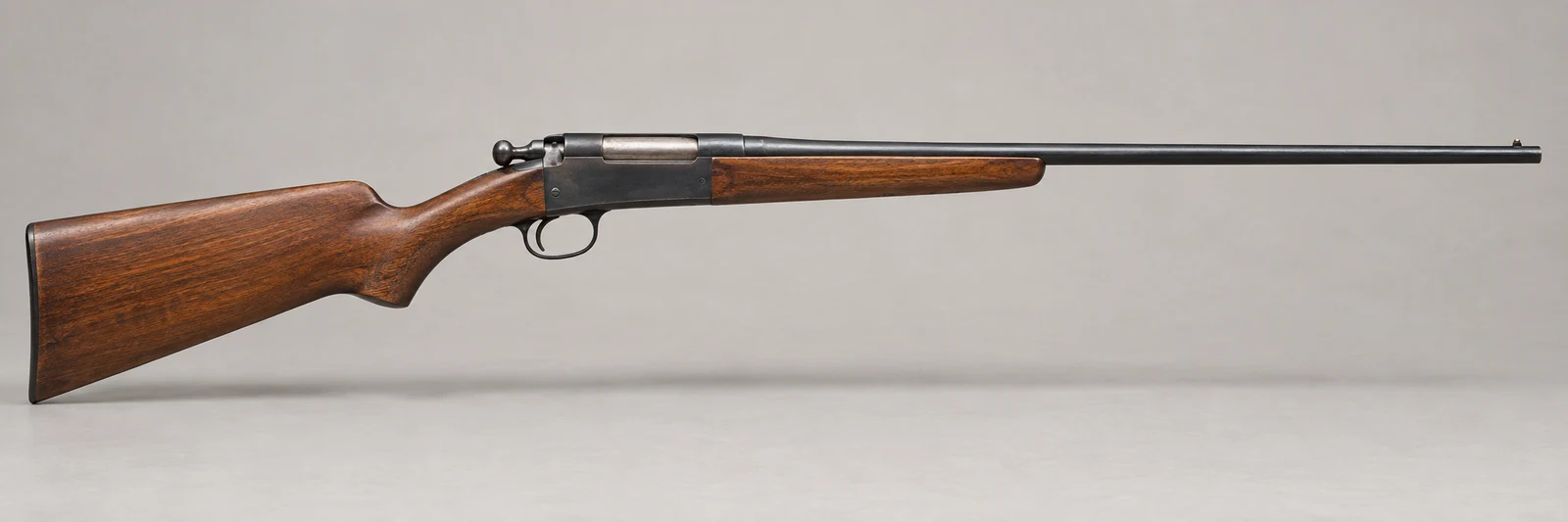
The Winchester Model 41 is a single-shot, bolt-action .410 bore shotgun produced from 1920 to 1934, with limited production continuing intermittently to about 1941.
- Produced:
- 1920–1934 (regular production); intermittent limited production to about 1941
- Action:
- bolt-action
New to gun terms? Start here
- Model:
- The name of the gun design, such as Model 94. A model name that looks like a year does not tell you when your gun was made.
- Serial number:
- The number stamped on an individual gun. Include letters that are part of the number. A separate letter stamped above it, like the Model 97's C, D or E, is a different marking.
- Receiver:
- The main metal body just behind the barrel. The receiver ring is its front section, where the barrel joins it.
- Tang:
- A strip of metal extending from the receiver into the stock. The lower tang runs underneath, behind the trigger.
- Stock:
- The part you hold against your shoulder, usually made of wood on older Winchesters.
- Forearm or forend:
- The part under the barrel where your forward hand holds the gun.
- Action:
- The mechanism that loads and removes cartridges. Names such as lever action, pump action, and bolt action describe how it works.
- Caliber or gauge:
- The ammunition size or type a gun is designed to use. This marking is different from the model and serial number.
- Takedown:
- A version designed to separate into major sections for storage. A takedown joint is where those sections meet.
- Proof mark:
- A factory testing mark, such as Winchester's oval WP stamp. It is not a serial number or a date code.
- Peep or aperture sight:
- A rear sight with a small hole to look through. A hooded front sight has a cover around it.
Most Model 41 guns have no serial number
Winchester never numbered the Model 41.
These guns usually have model and ammunition markings on the barrel, and may also have patent dates. Those are different from a serial number. The model’s production ended before federal law required serial numbers on rifles and shotguns in 1968. A missing number is normal for this model; it does not by itself show whether the gun has been altered.
About 22,000 to 23,000 were made, depending on the reference.
A single-shot bolt-action .410, the third of Winchester's low-priced single-shot shotguns. Regular production ran 1920 to 1934, with small intermittent runs to about 1941.
Without a factory serial number, a serial-number search cannot identify this individual gun. The feature clues below may help narrow its age.
If your Model 41 has a number on it
A number may be an owner’s mark, a store’s inventory number, or an importer’s mark. Some factory stamps identify an inspector or a part. On certain models, a two-digit stamp under the barrel can indicate a year. Patent dates describe patents, not when this particular gun was made. We do not have serial lookup tables for these markings.
How to date a Model 41 without a serial number
Winchester changed the Model 41 over its run, and the published references date some of those changes. These clues can help narrow the possible years:
- The chamber was 2½ inches through 1932 and 3 inches from 1933. That splits production into before and after 1933, nothing finer.
- A pistol-grip stock was standard, a straight grip was offered at no extra charge, and checkered stocks were special order. None of these dates the gun.
Features suggest a range of years. Winchester sometimes used older parts after a design changed, and parts may have been replaced later.
Winchester Model 41 value: what it sells for at auction
We found 7 single-gun auction sales of the Winchester Model 41 at Morphy Auctions, Redding Auction Services, and Amoskeag Auction Company between Sep 2023 and Sep 2026. They sold for $169 to $875.
That is too few sales for a typical price, so we list each one instead. A price table needs at least 40 sales. With only a few sales, one gun in unusual condition can set the high or the low.
We leave out listings described as deluxe, special-order, engraved, restored, or commemorative, and other exceptions in the value guide. Wear, repairs, original parts, and factory upgrades can make a particular gun worth more or less. These sales are a comparison, not an appraisal of your gun.
Every Model 41 sale we counted
Newest first. Their features and condition may differ from your gun. A lot number identifies an item in an auction.
| Sold | Gun | Auction company | Price |
|---|---|---|---|
| Aug 2026 | Model 41 | Amoskeag lot 2330 | $453 |
| Jun 2026 | Model 41 · 410 | Redding lot 88R | $875 |
| Mar 2026 | Model 41 · 410 | Redding lot 468R | $380 |
| Nov 2025 | Model 41 · 410 | Morphy lot 1590 | $338 |
| Jul 2025 | Model 41 · 410 | Redding lot 177R | $500 |
| Mar 2025 | Model 41 | Amoskeag lot 2330 | $205 |
| Aug 2024 | Model 41 | Amoskeag lot 2402 | $169 |
Prices are in US dollars and include the buyer’s premium, the auction company’s fee added to the winning bid, where the house charges one; Redding charges none. They are not the amount the seller receives. A dealer’s offer or private sale price may differ. The full picture, model by model →